
Global Leadership Trends: What We’re Seeing

By Amber Vanderburg
Lately, it feels like I’ve been in a new country every time I turn around, which definitely has its advantages. I get to see how different cultures work, lead, communicate, and adapt to new realities like AI, succession planning, cross-cultural collaboration, and changing workforce expectations.
Along the way, people ask, “Amber, what global leadership trends are you seeing?”
Since we work in global tech, you might expect my answer to be AI, AI, AI. And AI is certainly part of the answer, alongside major shifts in culture, talent development, succession planning, and global growth.
So, I pulled together the biggest trends I’m seeing. I would love to hear what you are seeing too, so please reach out and share.
AI may dominate the conversation, but the biggest global leadership trends are about people. Companies need leaders who can work across cultures, develop new generations, guide AI adoption, and balance global standards with local realities. The future of leadership is increasingly human, cross-cultural, and glocal.
If you’ve got the time, keep reading.
AI adoption looks different across cultures
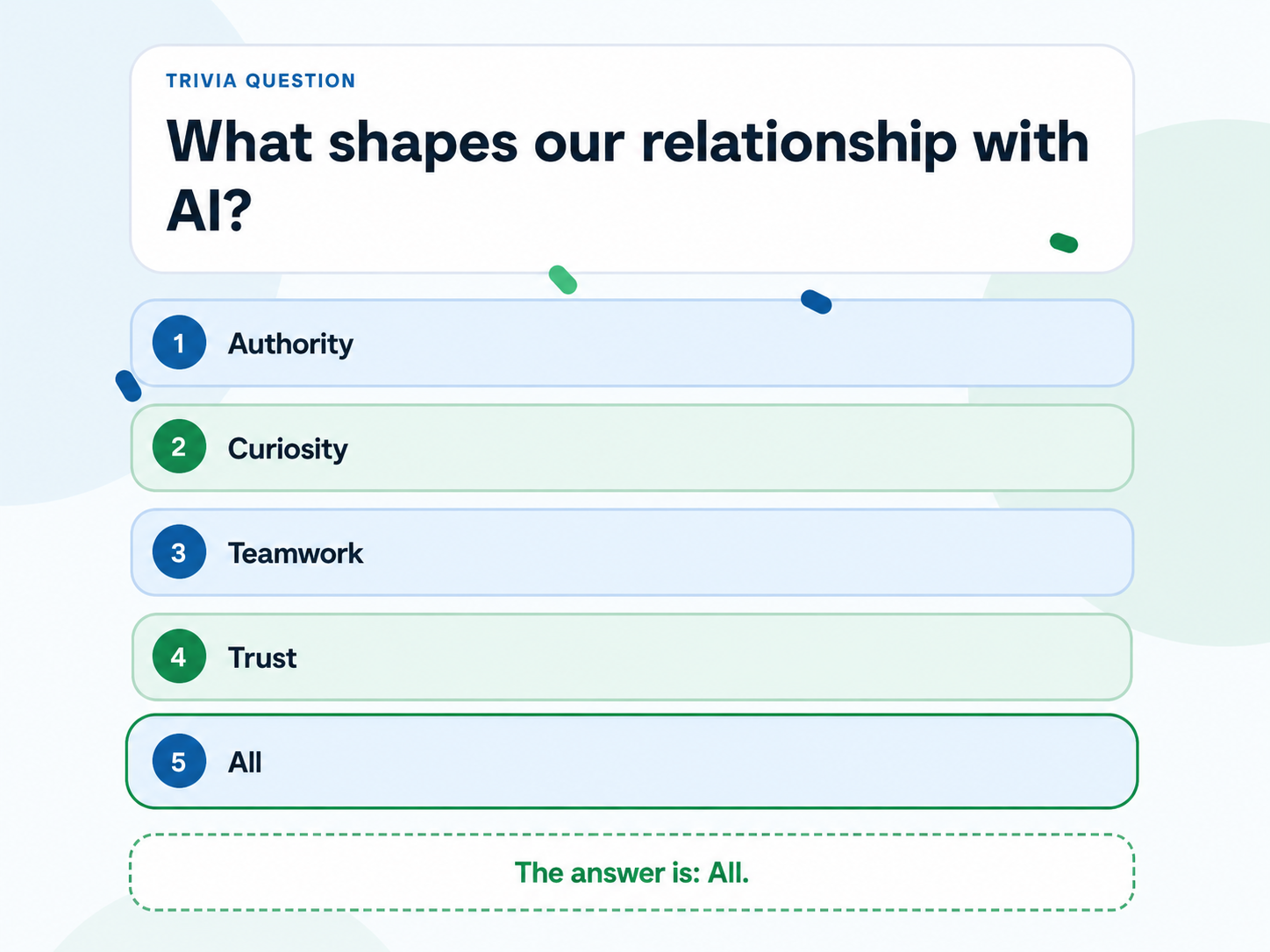
“Our relationship with AI is shaped by our relationship with authority, curiosity, teamwork, and trust.”
Keep Reading
Organizations are asking how they can prepare entire workforces for AI and build capabilities that extend beyond using individual tools.
That requires change leadership, communication, and an understanding of how different cultures interact with technology.
In countries that place a high value on harmony and consensus, I encountered deeper hesitation around AI as a disruption threat.
Hierarchical cultures may approach AI differently. Generally we found stronger initial questions with opportunities to improve in iterative questions.
“Our relationship with AI is shaped by our relationship with authority, curiosity, teamwork, and trust.”
The beauty of diversity in teams is the variety of questions and approaches to using AI.
Now, we have the opportunity and challenge in
1. AI governance: Find the balance between AI global standards and flexibility for personal insight. Organizations need shared standards with room for local context.
2. Training: One global AI training program will rarely work equally well everywhere. Design training to consider the cultural and individual nuances of each team.
3. Leadership Usage/Trust: We’ve already seen several situations where the leader may trust AI more than the junior employees so the team members present their ideas as AI generated to increase the liklihood for approval.
These micro-moments present a larger challenge; how is your leadership modeling AI and using it in their decision making.
AI is driving new learning opportunities

One trend we've noticed is growing demand for online learning around AI.
Keep Reading
One trend we've noticed is growing demand for learning around AI. Through our partnerships with organizations like the Scrum Alliance and others, we've had the opportunity to build online learning programs on how AI is reshaping HR, recruitment, administration, strategy, feedback, and leadership.
One trend we've noticed is growing demand for online learning around AI.
For example, our AI in Recruitment webinar is a top offering, covering AI tools for candidate screening, matching, communication, predictive analytics, and reducing hiring bias. Look out for the PATHWAYZ online learning series launching this fall, where we will explore AI across HR, administration, strategy, and feedback.
Creativity is becoming a business priority again
As technology produces routine work more quickly, human creativity grows even more valuable.
Keep Reading
This is especially exciting to see!
After years of focusing heavily on efficiency, productivity, and process, organizations are rediscovering creativity.
As technology produces routine work more quickly, human creativity grows even more valuable.
As Daniel Pink explores in A Whole New Mind, the future requires analytical ability alongside imagination, empathy, storytelling, and the ability to see connections. As technology produces routine work more quickly, human creativity grows even more valuable.
Gen Z is reshaping leadership

“The sandpaper on my leadership I didn’t know I needed.”
Keep Reading
Gen Z is entering the workforce with questions about how and why workplaces operate as they do.
In The Future Begins with Z, there is a memorable description of Gen Z:
“The sandpaper on my leadership I didn’t know I needed.”
I love that idea.
Sandpaper can be uncomfortable, but it reveals what needs attention. Gen Z’s questions about purpose, transparency, mental health, flexibility, and fairness are prompting leaders to examine long-standing workplace practices.
Strong leaders will use those questions to become clearer and more intentional.
AI is changing talent pipelines

The future of talent may be less about climbing the ladder and more about having the tools to build your own.
Keep Reading
AI is removing some of the traditional rungs people once climbed on the way to leadership.
But here’s the twist: many younger employees aren’t sure they want the old ladder anyway. They want room to explore, build new skills, move sideways, try something new, and create a career that fits where they’re going.
That means organizations may need to stop focusing so much on building the perfect ladder and start building a better toolbox. Give people the skills, experiences, mentorship, and opportunities to create their own path forward.
The future of talent may be less about climbing the ladder and more about having the tools to build your own.
Coaching, feedback, and delegation are back at the center
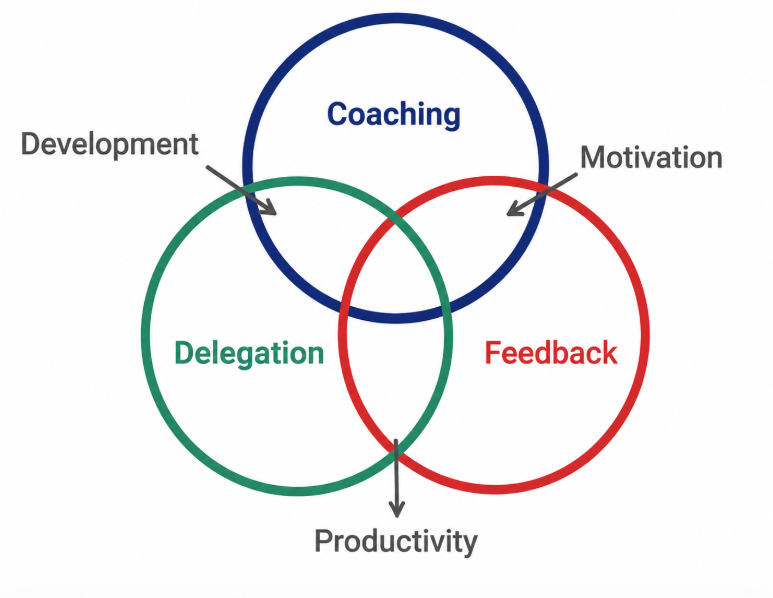
There is an important difference between true delegation and delegation by abdication.
Keep Reading
For a while, it seemed to be all about productivity! Now we are seeing those same organizations coming back asking for support with coaching and feedback as many leaders still struggle to have honest, constructive conversations despite now being faster and more productive.
Within this trend, delegation is rising to be the most popular topic we talk with clients about, especially as organizations think about succession planning.
There is an important difference between true delegation and delegation by abdication.
True delegation provides clarity, authority, resources, support, and accountability. Delegation by abdication transfers a task and leaves the other person to figure it out. This is one place we really have been helping companies lately and it doesn’t look to be slowing.
Remote teams are still learning how to work together

Remote collaboration is both a technology AND leadership challenge and if you’ve ever managed a remote team you know exactly what I’m talking about!
Keep Reading
Remote work is firmly established. The current challenge is creating clarity, trust, connection, and accountability across distances, time zones, cultures, and communication styles.
Global technology teams often feel this most intensely. A team can have tremendous technical expertise and still struggle without shared expectations around communication, decisions, feedback, and ownership.
Remote collaboration is both a technology AND leadership challenge.
Remote collaboration is both a technology AND leadership challenge and if you’ve ever managed a remote team you know exactly what I’m talking about! But the good news is there are tried and tested methods to improve this despite being a relatively recent trend.
APAC is leading certification growth
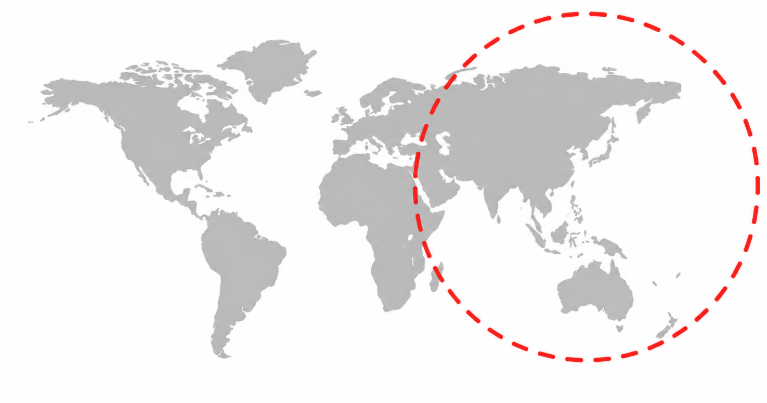
It has been exciting to see participants across Vietnam and the wider region take what they learn and put it to work right away.
Keep Reading
APAC has recently become one of our top markets for PATHWAYZ certifications. One of our latest successes is the Human Resources Action Certification, presented with Vietnam HR Academy. Participants complete practical workplace projects through 84 short videos, six live sessions, and hands-on workbooks. They earn an ECICEL-accredited certificate and digital badge while creating plans they can immediately use for recruitment, onboarding, company policies, and other HR priorities.
It has been exciting to see participants across Vietnam and the wider region take what they learn and put it to work right away.
Multigenerational leadership continues to grow

Leaders must recognize that the same message or opportunity may be experienced differently across generations.
Keep Reading
Many workplaces now include four or even five generations, each bringing different experiences with technology, authority, career progression, communication, and change.
Leaders must recognize that the same message or opportunity may be experienced differently across generations.
Organizations need leaders who can develop younger talent while respecting and using the experience already present.
Glocal leadership is becoming essential

Strong global leadership combines global consistency with local relevance.
Keep Reading
One of the biggest questions I hear is, “How do we create something global while keeping it locally relevant?”
This is often called being “glocal.” It means establishing global standards while making room for local cultures, needs, and realities.
This comes up in leadership development, HR certifications, AI training, and organizational culture.
Our approach includes working with facilitators and coaches around the world rather than sending exclusively US-based facilitators into every market. We equip local people to support their own communities and organizations.
We also use dialogue-based facilitation. Participants contribute to the conversation and help shape how the content applies within their cultural and organizational context.
Strong global leadership combines global consistency with local relevance.
The trends are clear. What do leaders do next?

The strongest companies I see are already preparing leaders to communicate across cultures, coach across generations, delegate with intention, question AI responsibly, and understand the human impact of every strategy.
They recognize that technology, expansion, and change depend on people who are ready to lead through them.
If that does not sound like your organization yet, that is okay. The first step is understanding where you are today. The second is deciding where your people and leaders need to be next.
The first three things I would do are:
And, of course, give us a call if you would like PATHWAYZ to walk alongside you in your next chapter. We developed the WAYZ Model for this exact moment.
A clear path for continued growth.
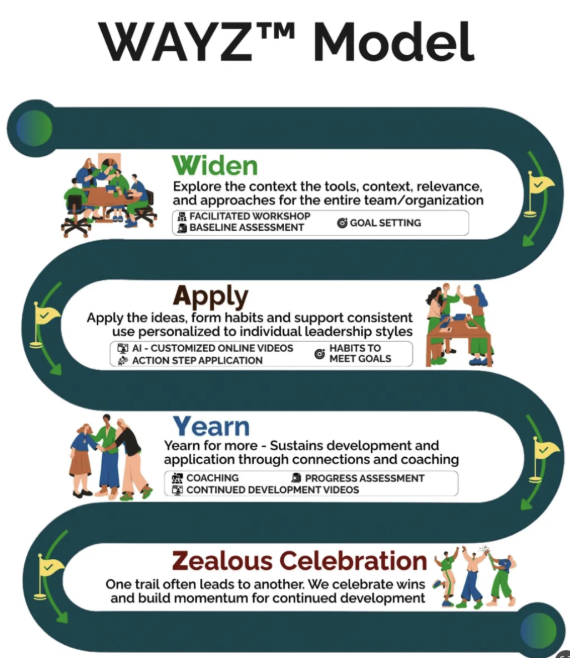
The WAYZ™ Model gives leaders a clear path for continued growth. It starts by looking at the bigger picture and identifying what the team needs. Leaders then turn what they learn into practical actions and everyday habits. Ongoing coaching, resources, and support help them keep growing, while celebrating progress builds confidence and momentum.
Because every organization’s path will look different, the model creates structure while leaving room for your people, culture, and goals.
Learn More About the WAYZ™ Model →a continuous journey. We’re with you every step of the way.